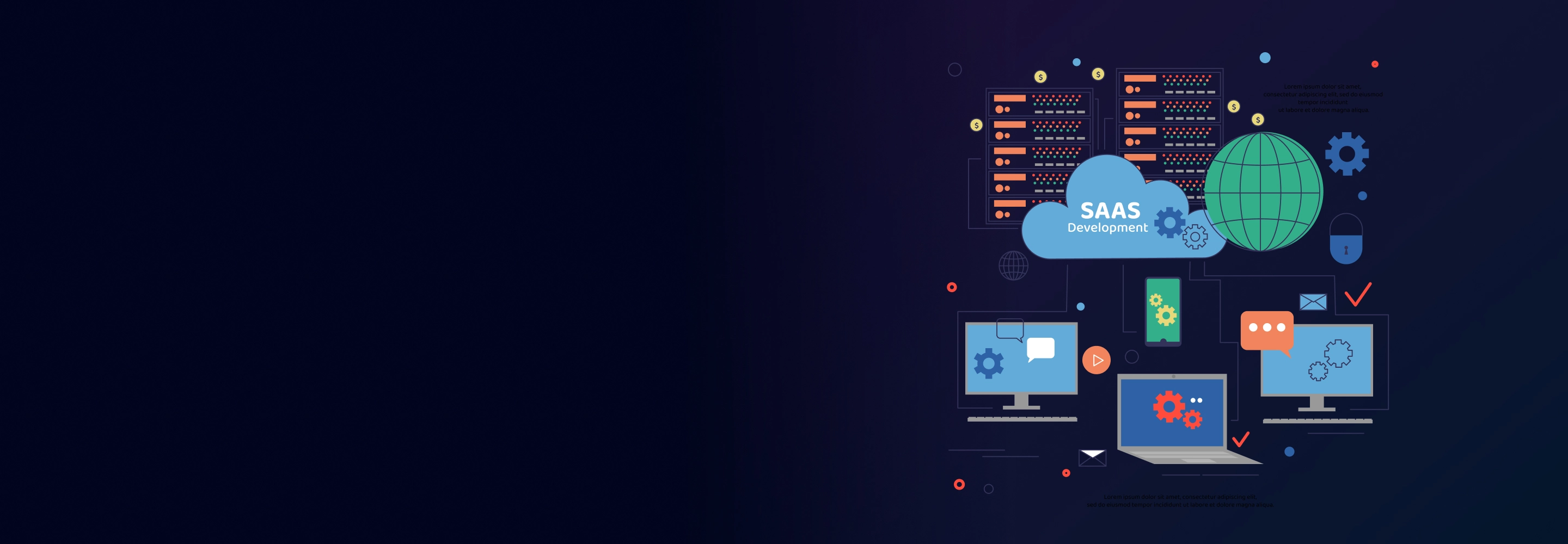
SaaS Products Engineered to Run as a Business
We design and build SaaS products with the parts customers never see but every SaaS business depends on: multi-tenancy, subscriptions, user management, security and the admin tooling to support customers as you grow.
Core stack.NET / C# · ASP.NET Core · React · TypeScript · Microservices · Microsoft Azure · SQL Server · REST APIs
When a SaaS Build Makes Sense
SaaS development usually starts from one of these points.
Start smaller than you think.
A focused first version that real customers use teaches more than a large build planned on assumptions.
SaaS consultingYou have a proven process to productize
Your team or clients rely on a way of working that other businesses would pay to use as software.
You need a first version in customer's hands
You want a focused MVP that proves demand without building everything at once.
Your product is outgrowing its first build
An early version works, but adding customers, features or integrations keeps getting harder.
You want to move installed software to SaaS
Customers run your software on their own servers and you want to offer it as a subscription instead.
What We Build Into Your SaaS Product
Pick one to see what it usually involves and how we typically build it.
MVP and product development
A focused first version built around the core workflow customers will pay for, designed to be extended rather than rebuilt.
- Scope defined around core value
- Clickable prototype before the build
- Architecture ready to grow
Multi-tenant architecture
Architecture that keeps each customer’s data separate and secure while running on shared infrastructure.
- Tenant data isolation
- Per-tenant configuration
- Scalable hosting
Subscriptions, billing and user management
Plans, trials, subscriptions and payments, plus sign-up, roles and permissions for each customer’s users.
- Plans, trials and subscriptions
- Payment provider integration
- Users, roles and permissions
Admin and support tooling
Back-office tools to manage customers, monitor usage and support users without touching the database.
- Customer and account management
- Usage and activity insights
- Support tools for your team
APIs and integrations
Public APIs and integrations with the tools your customers already use, which often decide whether they buy.
- Public REST APIs
- CRM, accounting and email integrations
- Webhooks for customer systems
Scaling, modernization and support
Performance, reliability and ongoing development as the customer base grows, including moving installed software to a SaaS model.
- Performance and scalability work
- Installed-to-SaaS migration
- Ongoing product development
Prove the Core. Then Scale the Product.
Every engagement follows the same problem-first Systems Engineering Method we use across AppPotter.
Define the core value
We identify the workflow customers will pay for and what the first version must do to prove it.
Design the product
User flows and screens are designed together with the SaaS foundations: tenancy, roles and billing.
Architect for growth
An architecture that supports more customers and features without a rebuild.
Build the first version
Delivered in increments, with working software at agreed checkpoints.
Launch and learn
Launch to early customers, then use real usage and feedback to set priorities.
Scale and evolve
A dedicated team extends the product as customers and requirements grow.
What Changes When the Process Runs on the Right System
We agree on what to measure during discovery, so success is defined before the build starts, not after launch.
Before: A process only your team can run
After: A product other businesses can subscribe to
Before: Big plans built on assumptions
After: A focused first version tested with real customers
Before: Each new customer needs manual setup
After: Self-service sign-up and tenant configuration
Before: An early build that’s hard to extend
After: An architecture designed to grow with the customer base
Before: Customer support means database changes
After: Admin tools your team can use directly
Chosen for Your Systems, Not Our Preferences
Our depth is in .NET for the SaaS backend, hosted on Azure or AWS, with React or Angular for the product interface, chosen for long-term maintainability.
Where we have the deepest production experience
- .NET / C#Backend
- ASP.NET CoreAPIs & services
- ReactFrontend
- TypeScriptFrontend
- MicroservicesArchitecture
- Microsoft AzureCloud
- SQL ServerData
- REST APIsIntegration
Also used when the project calls for it
- Frontend
- Data
- Payments
- Cloud & DevOps
- Testing
Senior Engineers, Directly Involved
- Founder-led delivery
Parth and Umesh are personally involved in every engagement.
From scoping the work to standing behind its outcome, backed by Parth's 14+ years of enterprise technology and delivery experience.
Meet our leadership - Current engagement · under NDA
A long-term software engagement with a US-based technology company.
Client identity and project details are undisclosed due to confidentiality obligations. We treat your work the same way.
See our approach
Ways to Work Together
- Advisory & Discovery
Short-term Strategy Engagements
For a focused, short-term engagement - an assessment, an architecture review, or technical due diligence - before any build begins.
- Comprehensive architecture reviews
- Due Diligence of your tech stack
- Roadmap and Estimation
- Fixed Price
Fixed Cost Model
For clearly-scoped integration or build work, where the outcome and boundaries are already well defined.
- Change Management process
- Milestone-based delivery
- Quality & SLA Commitments
- Dedicated Team
Dedicated Product Engineering Team
For long-term product or systems work - a sustained AppPotter engineering team working against your roadmap, not rotated project to project.
- Seamless onboarding and roadmap planning
- Fixed Monthly Retainer
- PO/Tech-lead Collaborations


Whichever structure fits, Parth and Umesh are personally involved, from scoping the engagement to standing behind its outcome.
Meet our leadershipPart of Custom Engineering
We build custom only when an existing platform, integration or standard product can't solve the business problem. A SaaS product is custom software built to be sold: the same engineering, with the business model built in.
SaaS Development FAQs
Still unsure? A 30-minute conversation usually answers the rest.
Book a callOnly what’s needed to prove customers will use and pay for the core workflow, plus the foundations that are expensive to add later, such as tenancy, security and user management.
It lets many customers use one product while keeping each customer’s data separate. Most SaaS products need it; we design the right level of separation for your customers and data.
Yes. We assess the current product and plan a staged move to a hosted, multi-tenant model, keeping existing customers running during the transition.
We integrate established payment and subscription providers rather than building billing from scratch and connect them to plans, trials and user access.
Our deepest experience is in .NET and ASP.NET Core with React or Angular, hosted on Azure or AWS. We choose based on your team, integrations and long-term maintenance.
Yes. Many SaaS products continue with a dedicated team working against the product roadmap.
Tell Us What Your Product Needs to Do First
We’ll help you define the first version worth building and the foundations it needs to grow.
Book a GTM Systems Assessment30-minute call · No obligation · No sales pitch